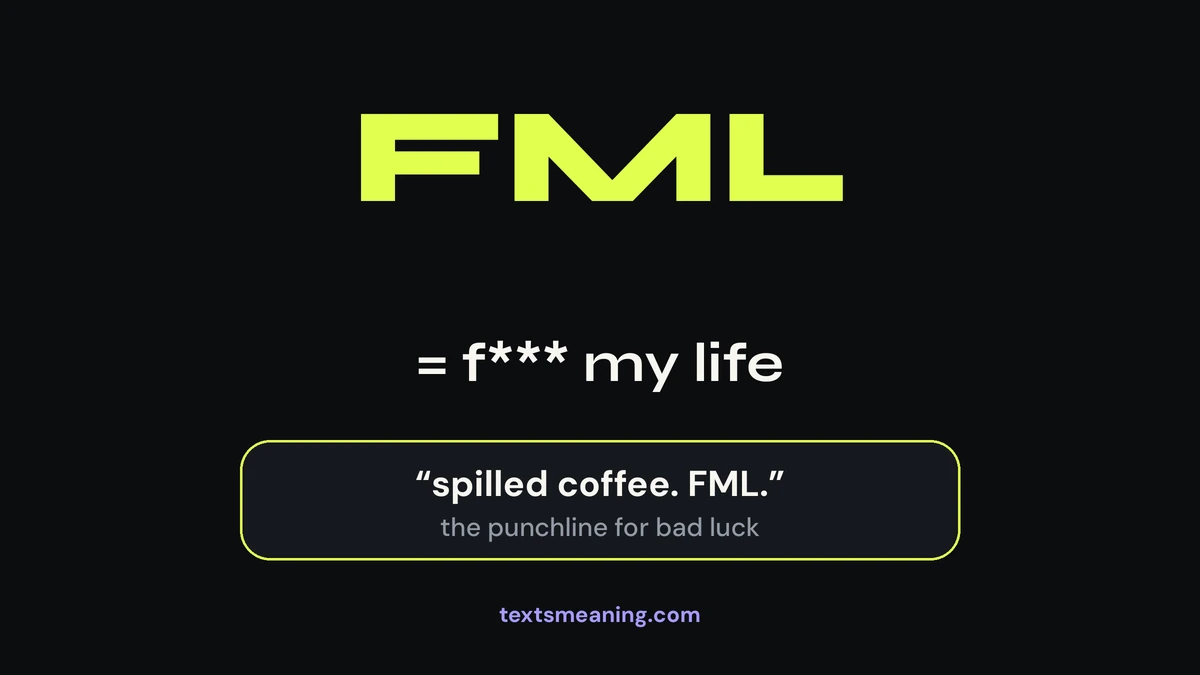
What does FML mean in text? FML means “f*** my life” — the dramatic punchline people drop after bad luck strikes. “Spilled coffee on my shirt before the meeting. FML.” It is almost never literal. It is exaggeration on purpose: a small disaster, told as if it were a tragedy, so everyone can laugh at it together. The one skill this guide teaches is telling a joking FML from a serious one — the Punchline-or-Plea Test below.
Most guides stop at the definition and a few examples. This one goes further: the three-check test for joke versus distress, a six-reading tone spectrum, what FML looks like on TikTok, Snapchat, Instagram, and in plain texts, how it lands depending on who sends it, when the profanity makes it the wrong choice, and the circulating expansions that do not survive an evidence check.
What “FML” Means in Text
“FML” means “f*** my life.” It is an interjection — a reaction word, not a sentence — used when something goes wrong. The primary dictionary source is unambiguous: Wiktionary defines FML as (Internet slang, vulgar) “Fuck my life (expressing despairing annoyance).” That parenthetical is the whole job description: despairing annoyance, performed at full volume. In this guide the expansion appears in asterisked form everywhere except this section, following the same standard used for the site’s other vulgar terms.
FML almost always arrives AFTER the story, as the punchline. “I studied all night and still failed. FML.” The story does the explaining; FML does the feeling. It says: this was unlucky, I know it sounds dramatic, and I am choosing to laugh at it rather than just suffer it. That is why FML so often reads as funny even when the event itself was not: the humor is in the mismatch between a small problem and a huge reaction.
Two things FML is not. It is not a request for help — nobody texts “FML” expecting rescue, they expect sympathy or laughter. And it is not a literal statement about someone’s whole life. When a friend texts “FML” about a missed bus, they are not telling you their life is ruined. They are telling you their morning is ruined, in the funniest way they know how.
The Punchline-or-Plea Test
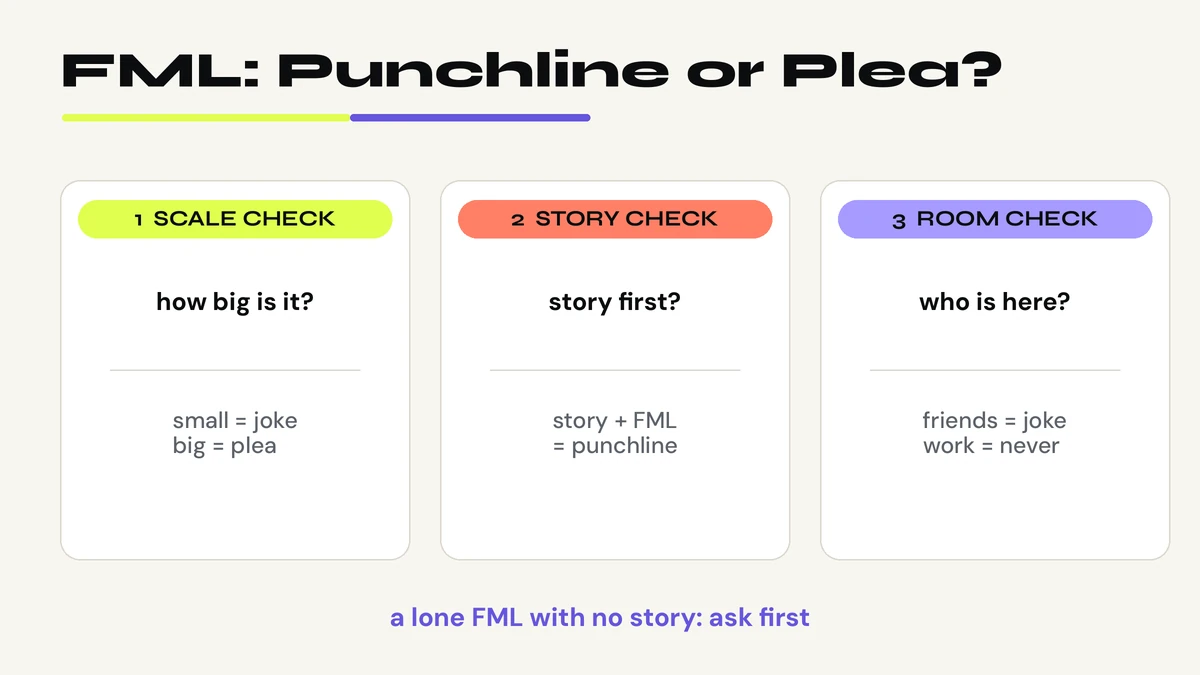
FML has exactly one dangerous ambiguity: is it a joke, or is someone genuinely distressed? Three checks settle it:
- Check 1 — The Scale Check. How big is the problem? Spilled coffee, a missed bus, a reply-all disaster: punchline. Grief, a breakup, a job loss, real harm: not a punchline. If the problem is small, FML is a joke. If it is large, treat FML as a plea until proven otherwise.
- Check 2 — The Story Check. Did a story come first? “Locked myself out, locksmith is two hours away. FML” — story first, punchline last: joke. A lone “FML” with no story at all is ambiguous by design. Do not guess; ask.
- Check 3 — The Company Check. Who is in the room? Friends and group chats are the punchline zone. A condolence thread, a work chat, or a stranger’s serious post is not. The same letters in the wrong room stop being funny.
Worked pair. “Got seated next to a screaming baby on a six-hour flight. FML” — small problem, story first, friends: punchline, laugh. “FML” alone at midnight after a week of silence — no story, unknown scale: do not joke. Ask “rough day?” first. Getting this wrong is the only real way to misuse FML as a reader.
“FML” in Real Chats
Illustrative examples written for this guide — not presented as real transcripts:
- The coffee punchline. “Spilled coffee on my new shirt before the meeting. FML” — the classic: small disaster, maximum language.
- The morning pile-up. “Missed the bus, phone died, and it started raining. FML” — three small disasters stacked until only exaggeration fits.
- The reply-all disaster. “Just sent the meme to the whole company channel instead of my friend. FML” — embarrassment, told as comedy.
- The commiseration. “Studied all night and still failed” → “FML, same, that exam was brutal” — bonding over shared bad luck.
- The ambiguous lone FML. “FML” — no story, no scale. This is the one to ask about before joking.
The FML Tone Spectrum
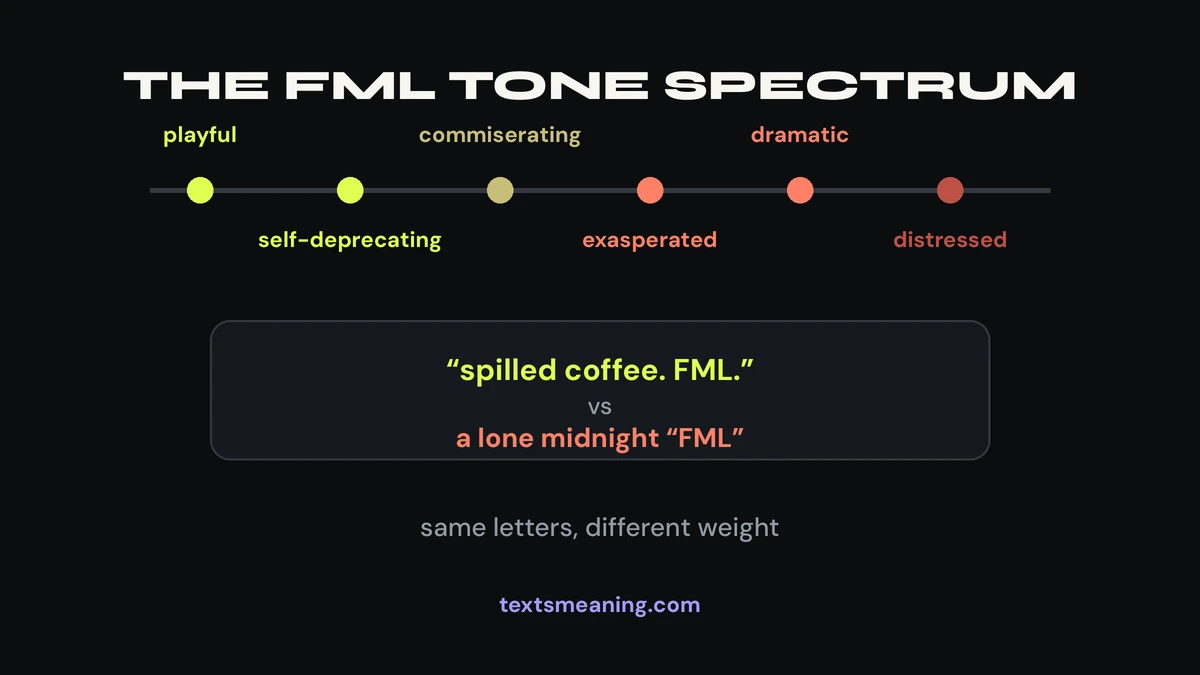
FML’s meaning stays fixed; its tone slides. Six readings, lightest to heaviest:
- Playful / ironic: “Spilled coffee. FML.” — the default. Nobody is actually despairing.
- Self-deprecating: “Tripped in front of everyone. FML” — laughing at yourself before anyone else can.
- Commiserating: “FML, same” — joining someone else’s bad luck, not competing with it.
- Exasperated: “Third thing to go wrong today. FML” — the joke is wearing thin; frustration is real.
- Dramatic / hyperbolic: “My phone died at 2%. FML” — small problem, theatrical reaction, on purpose.
- Genuinely distressed: “FML” after real bad news — rare, and the only reading where a joke reply is a mistake.
The tone lives in the story before FML, not in the letters. A friend who always sends playful FMLs and suddenly sends a bare one at midnight has changed tone, not meaning — and the Punchline-or-Plea Test is how you catch the change.
“FML” on TikTok
On TikTok, FML is a caption and comment punchline: “POV: you studied all night and still failed. FML” and comment-section commiseration under fail videos. The platform rewards the exaggerated version — the bigger the reaction to the smaller the disaster, the better the bit. No platform-specific meaning exists; TikTok just stages the punchline for an audience, where the laugh is the point.
“FML” on Snapchat
On Snapchat, FML fits fast, private venting: a photo of the spilled coffee, captioned “FML,” sent to a close friend. The ephemeral, in-the-moment format suits FML’s job — a feeling that needs expressing right now and will not matter tomorrow. The meaning is identical to everywhere else; Snapchat just keeps it between people who already know it is a joke.
“FML” on Instagram
On Instagram, FML shows up in Stories (“Monday. FML.” over a photo of traffic), in Reels captions, and in DMs where friends trade bad-luck stories. The public-facing version leans playful — nobody posts genuine distress as a Story caption and expects it to read as content. In DMs, the full range appears, including the exasperated and distressed readings.
“FML” in Text Messages
Plain texts are FML’s home ground: the morning pile-up text, the exam-fail text, the “you will not believe what just happened” text. It pairs naturally with its reassurance cousin DW — one friend vents “FML,” the other answers “dw, it happens” — and with BRB in the status-update cluster, where FML marks a bad moment and BRB marks a pause. The vent-and-comfort pair is the most common two-message exchange FML appears in.
Who’s Sending It: How “FML” Lands by Sender
No source documents a different meaning of FML per sender — the meaning stays fixed; what changes is how safe the joke is:
- Friend: the default. A friend’s FML is almost always a punchline — laugh, commiserate, or top it.
- Crush: read the room. An FML from a crush is usually an invitation to bond over bad luck — commiserate, do not compete with a worse story.
- Partner: context rules. A partner’s FML after a genuinely bad day deserves comfort first; the joke can wait for the second message.
- Parent: rare and usually literal. A parent texting FML is less fluent in the joke register — take it more seriously than a friend’s.
- Coworker / boss: a warning sign. FML in a work chat means someone is frustrated enough to swear in writing — do not joke back in the thread.
Is “FML” Rude? When to Skip It
Yes, FML can be rude — not because of its meaning but because of its profanity. The letters hide the swear word; everyone who knows the expansion hears it anyway. Skip FML in work messages, formal writing, messages to strangers, messages to children, and any thread about serious news or grief. In those rooms, “just my luck,” “ugh,” or “what a day” do the same job without the profanity.
The harder rule: never use FML about someone else’s serious bad news. “Your flight got cancelled? FML” centers your reaction, not their problem, and reads as dismissive. FML is for your own bad luck, told as a joke. Other people’s bad luck gets sympathy, not a punchline.
The reply-side rule matters more: when you receive FML, run the Punchline-or-Plea Test before you joke. A joke reply to a punchline FML builds friendship. A joke reply to a distressed FML breaks trust. When in doubt, kindness first.
Checked Claims: Expansions That Don’t Hold Up
Three letters attract folklore. The claims that fail evidence:
- “Find me later” — rejected as a texting meaning. Wiktionary lists it only as an rfv-sense (request for verification): no example, no attestation, no competitor documents real usage. A dictionary flag, not a meaning.
- “Follow my lead” / “first, middle, last” / “for my love” — rejected. These come from generic acronym lists that catalog every possible expansion of three letters, with no evidence anyone texts them. A list is not usage.
- “FML is safe for work because it is just letters” — rejected. Every source classifies FML as vulgar, and every workplace guide advises against it. Abbreviation does not launder profanity.
What SURVIVES: “f*** my life” as a dramatic, usually humorous interjection for bad luck (strong, universal). Everything else failed evidence.
“FML” vs Its Closest Cousins
FML belongs to the vulgar-reaction family — the words that swear at bad luck:
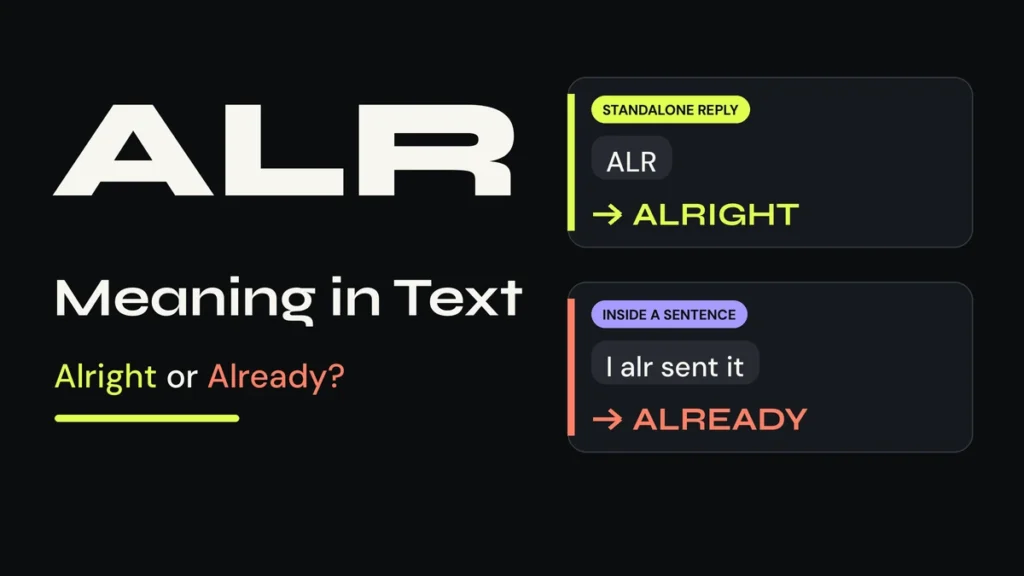
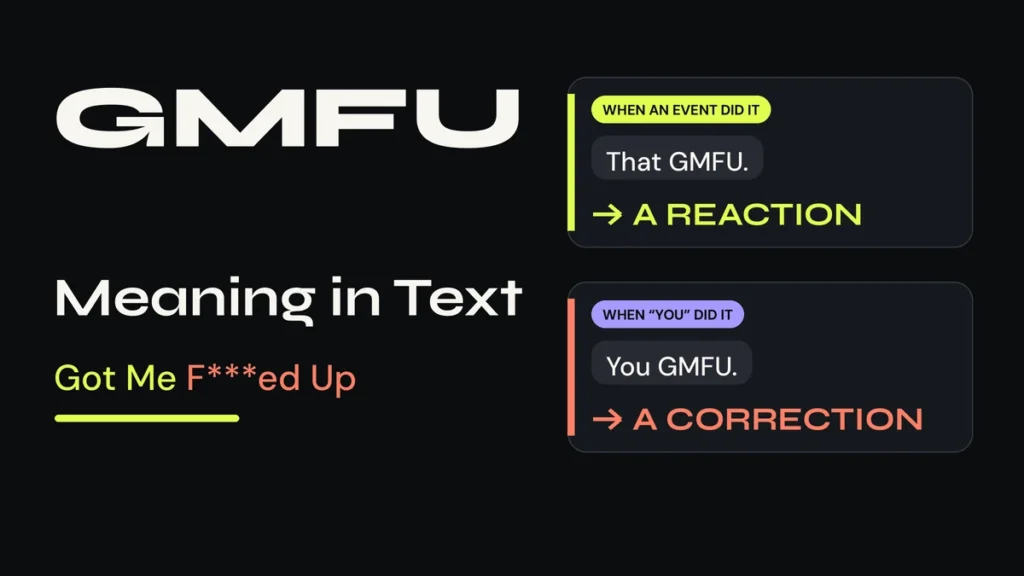
- GMFU (“got me f***ed up”) — the angrier cousin. GMFU reacts to something outrageous or unbelievable; FML reacts to something unlucky. GMFU blames the world; FML pities itself.
- BFFR (“be f***ing for real”) — the confrontational cousin. BFFR challenges someone else (“be serious”); FML mourns your own luck. BFFR points outward; FML points inward.
- FAFO (“f*** around and find out”) — the consequence cousin. FAFO warns that actions have outcomes; FML reports that luck had outcomes. FAFO is a threat; FML is a sigh.
- “Just my luck” — the clean twin. Same job, no profanity, safe everywhere FML is not. When in doubt, use this one.
The conversational companion: FML often travels with BTW (“btw, FML, I missed the bus”) — the same generation of shorthand, one adding information, the other adding feeling.
Where “FML” Came From
“Fuck my life” as an exclamation is older than the acronym, but FML’s explosion has a dated birthplace: FMyLife.com, launched in 2008. The site invited anonymous users to post short stories of unfortunate, embarrassing, or ironic events, each ending with “FML.” The format was perfect for sharing — a tiny story with a built-in punchline — and the acronym rode it from forums into social media and texting.
Nearly two decades later, FML is still in steady use, which is unusually long-lived for internet slang. The reason is structural: bad luck never goes out of style, and a three-letter punchline for it will always have a job. Where FML vents frustration, its consequence cousin FAFO warns about it — the two bookend the same bad day.
How to Reply When Someone Sends “FML”
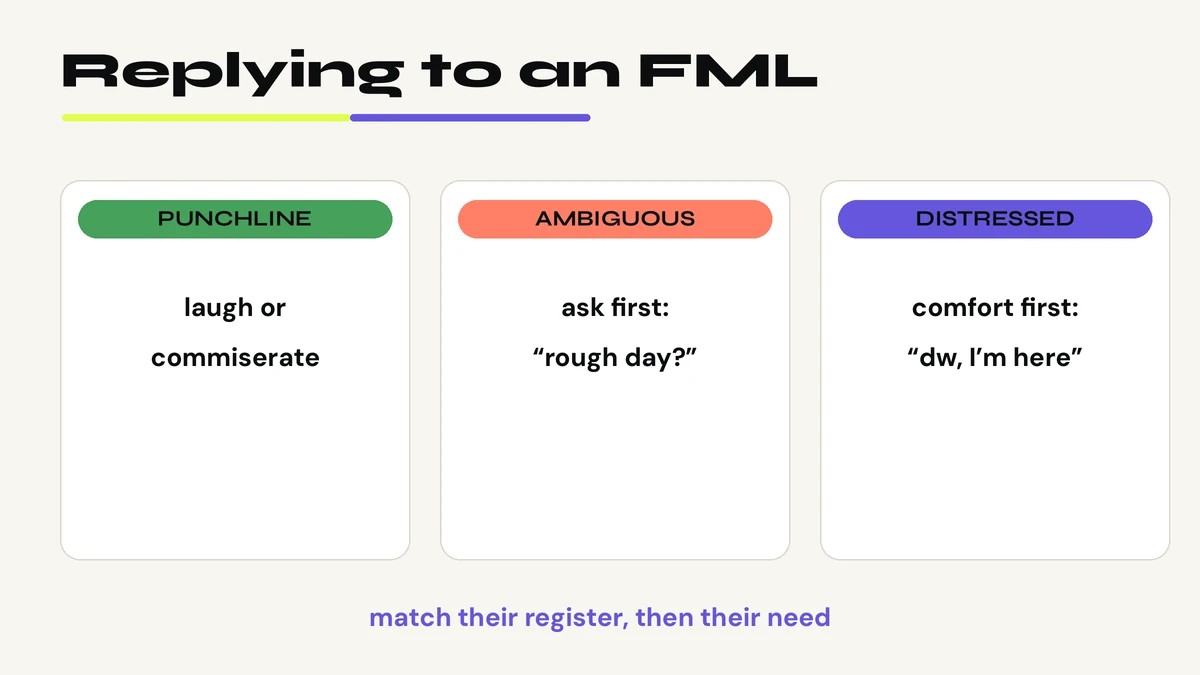
Three replies, matched to the test result:
- Punchline FML — laugh or commiserate: “classic,” “FML, same,” or a topping story of your own. The joke is an invitation; accept it.
- Ambiguous lone FML — ask first: “rough day?” or “what happened?” A question costs nothing and prevents the worst mistake.
- Distressed FML — comfort first: “that sounds awful, want to talk?” or the site’s own reassurance move: DW — “dw, I’m here.” Jokes can wait; kindness cannot.
What never works: replying with a bigger disaster (“that’s nothing, listen to MY day”), replying with advice nobody asked for, or replying to someone else’s serious news with FML yourself. The golden rule: match their register, then match their need.
Frequently Asked Questions
What does “FML” mean in a text message?
“F*** my life” — a dramatic, usually humorous reaction to bad luck. “Spilled coffee. FML” means the morning went wrong, told as a joke.
Is “FML” a swear word?
Yes. The expansion contains profanity, which is why this guide asterisks it. The letters do not make it clean — everyone who knows the meaning hears the swear word.
Does “FML” ever mean “find me later”?
Not in real texting. Wiktionary lists “find me later” only as an unverified rfv-sense with no example or attested usage. Treat it as a dictionary flag, not a meaning.
What does “FML” mean on TikTok, Snapchat, and Instagram?
The same meaning everywhere — no platform-specific meaning exists. TikTok stages it as a caption punchline, Snapchat keeps it as private venting, Instagram uses it in Stories and DMs. Same letters, different stage.
Is it rude to send “FML”?
It can be, because of the profanity and because of the room. Among friends about your own bad luck, it is fine. At work, to strangers, or about someone else’s serious news, skip it.
What’s the difference between “FML” and “GMFU”?
FML reacts to bad luck (“my day went wrong”); GMFU reacts to something outrageous (“this situation has me messed up”). FML pities itself; GMFU blames the world.
Someone just sent me “FML” with no story. What do I say?
Ask before joking: “rough day?” or “what happened?” If it was a punchline, they will tell you the story. If it was distress, you just did the right thing.
The Takeaway
“FML” is a three-letter punchline for bad luck — “f*** my life,” said dramatically, usually as a joke. When the letters arrive, run the Punchline-or-Plea Test: check the scale, check for a story, check the room. And when you send one, remember the only rule that matters: your bad luck gets the joke; other people’s bad luck gets sympathy.